Candle Making Supplies — The Whole List, in One Box
Wax, wicks, containers, a melting pitcher, a stirring spoon, centering devices, fragrance and dye. Six supply categories plus the extras, matched to each other and shipped free.
⏳ Stock is running low
✓ Free shipping ✓ 30-day money-back guarantee 🔒 Secure checkout
What Candle Making Supplies Do You Actually Need?
Candle supply catalogues are built for people who already make candles, which is why they are overwhelming for people who do not. Strip the catalogue back and the actual requirement list is short, and each item on it exists to solve one specific problem.
Wax is the candle. Soy, paraffin, coconut and beeswax all burn, and they differ in melting point, scent throw, finish and price. Our wax types guide compares them properly; for a first batch, soy is the standard recommendation and it is what ships in this kit.
Wicks control how the candle burns. Too small and the flame tunnels a hole down the middle, leaving a ring of unburnt wax. Too large and it smokes and burns hot. Wick choice depends mostly on container diameter, which is why kits pair the two for you and why our wick sizing guide exists for when you branch out.
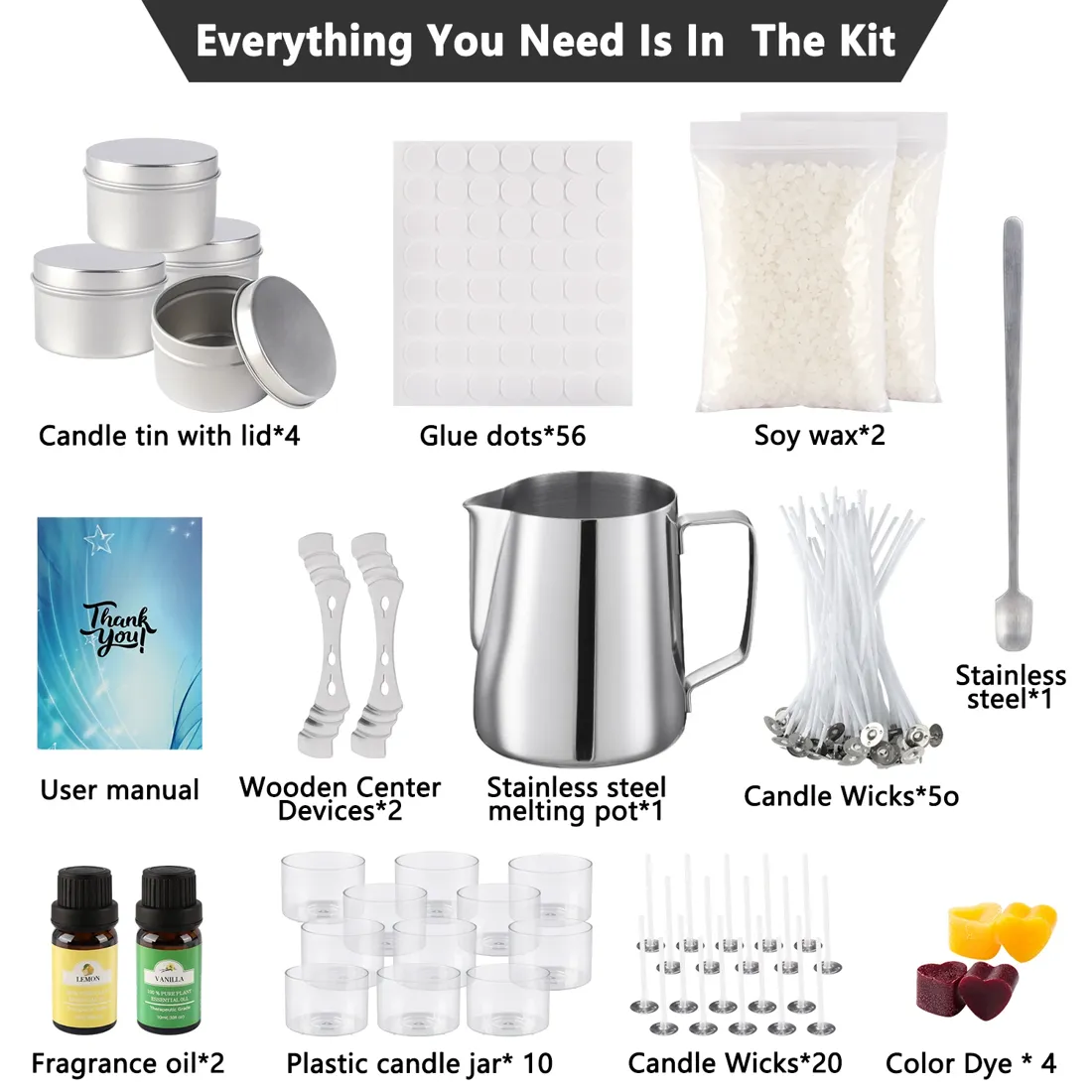
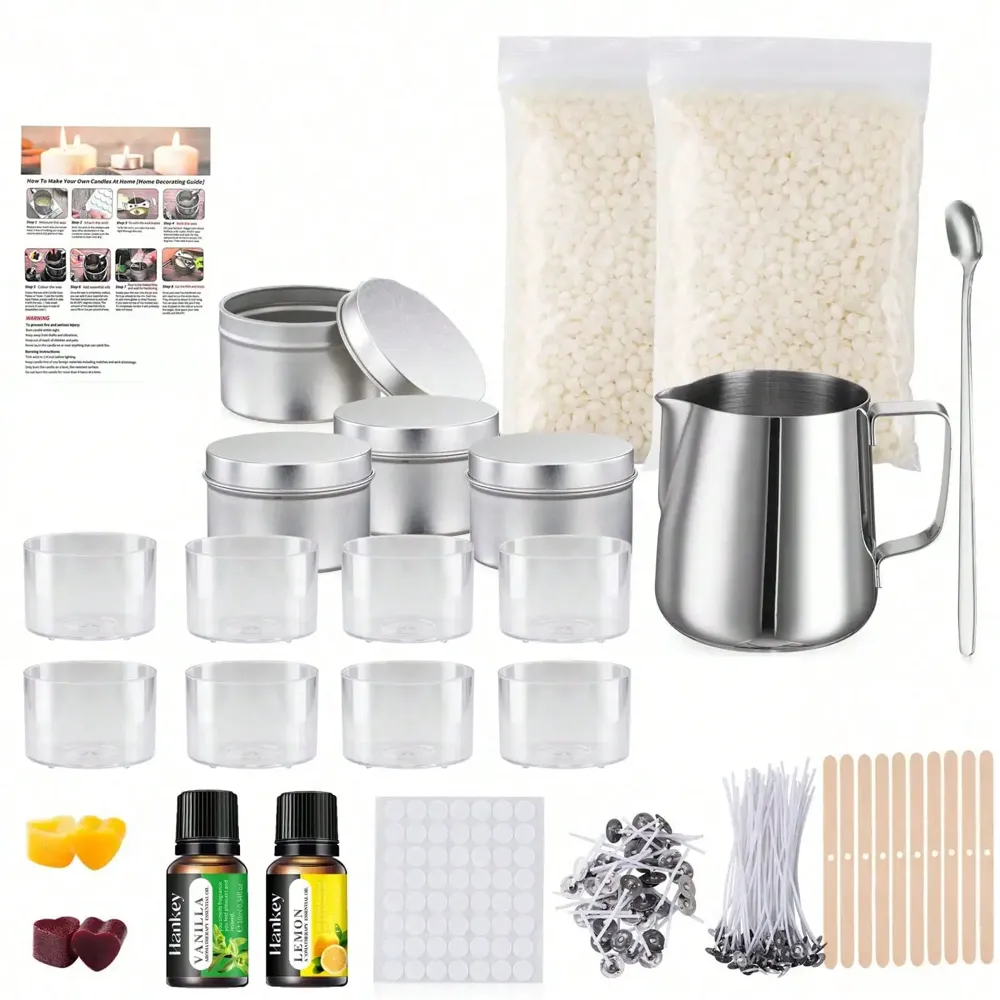
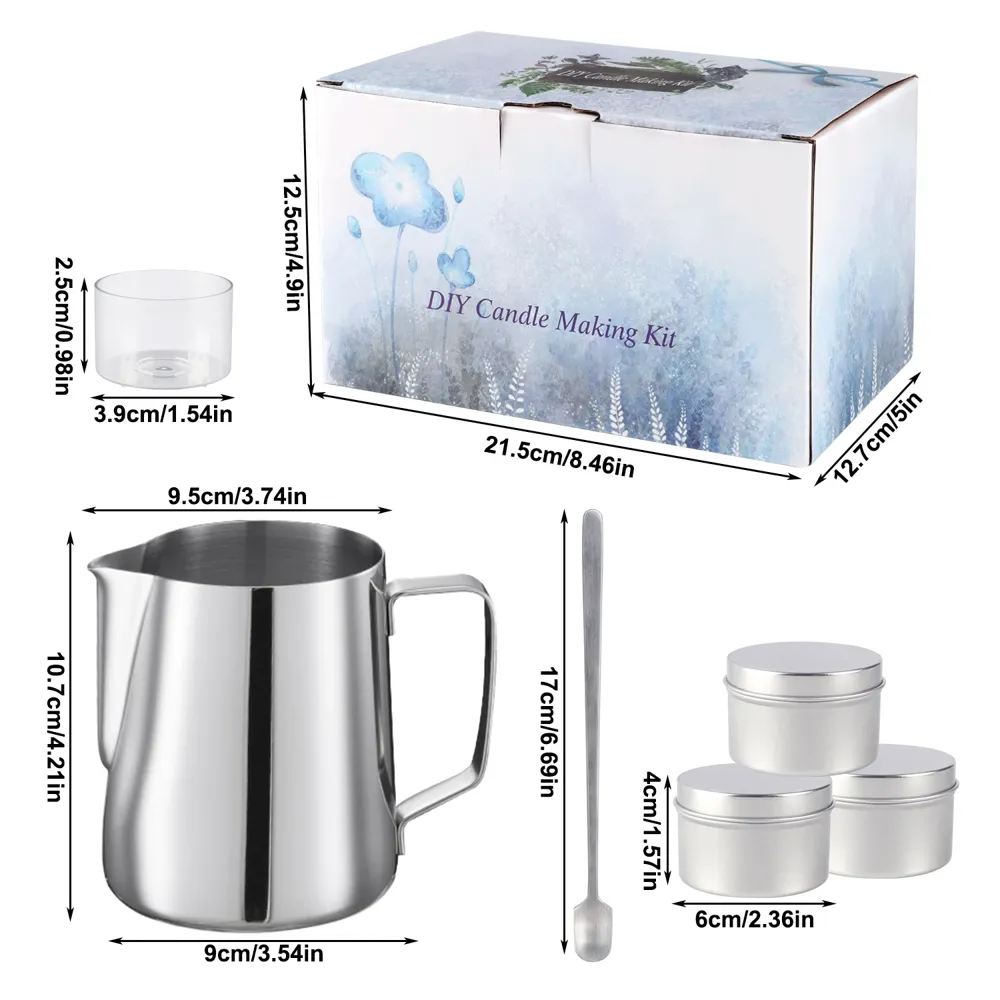
Containers have to tolerate heat and hold their shape. Metal tins and thick glass are the classics. The kit includes four sealable tins and ten small clear jars, which is a deliberate mix: tins for candles you keep or carry, small jars for testing a scent before committing a whole batch to it.
A melting vessel is the piece people underestimate. Wax should be melted gently in a water bath rather than over direct heat, and it should be poured from something with a spout and a handle. That is the whole job of the stainless pitcher, and it is the item that makes the difference between a clean pour and a wax-covered counter.
A stirring tool and centering devices finish the list. Fragrance needs to be stirred properly into the melt or it separates and the finished candle smells of very little. The wick needs to stay upright and centered while the wax hardens, which is what the two wooden devices do while you walk away.
Every Supply in the Kit, and What It Solves
| Supply | In the kit | The problem it solves |
|---|---|---|
| Soy wax flakes | 2 bags | Melts evenly and releases from containers cleanly |
| Pre-waxed wicks with sustainers | 50 + 20 | Stand upright on their own metal base, no assembly |
| Candle tins with lids | 4 | Finished candles that close and travel |
| Clear plastic jars | 10 | Test pours and small gifts without using a tin |
| Stainless melting pitcher | 1 | Water-bath melting plus a controlled pour |
| Stainless spoon | 1 | Stirs fragrance right through the melt |
| Wooden centering devices | 2 | Keeps wicks straight while wax sets |
| Glue dots | 56 | Anchors the wick base so it does not drift |
| Fragrance oils | 2 (lemon, vanilla) | Two finished scents without a separate order |
| Color dye blocks | 4 | Color without buying a full dye set |
Quantities as printed on the kit. No wax weight or numbered wick size is published, and we do not estimate either.
Why Separate Supplies Cost More Than You Expect
The trap in buying supplies individually is not the unit price, it is the minimum order size. Supply houses are built to serve makers who buy in quantity, so a first-time buyer ends up with far more of everything than a first batch needs. Here is the shape of the problem, category by category:
| Category | How it is usually sold | What a first batch needs |
|---|---|---|
| Wax | By the pound, often 5 lb and up | Enough for a handful of containers |
| Wicks | Packs of 100 in one size | A few, in a size matching your containers |
| Containers | By the case | Four to fourteen |
| Fragrance oil | By weight, one scent per bottle | Two scents to compare |
| Melting pitcher | Single item | One, and it lasts years |
Add a separate shipping charge from each shop and the arithmetic turns against the piece-by-piece route for a first purchase, which is the whole reason starter kits exist as a category. Once you know your preferences, the maths flips: bulk supply becomes the cheaper way to make candles, and the pitcher, spoon and centering devices you already own carry straight over.
What Ships in Every Kit
average across 105 four and five star buyer reviews of this kit, with 900+ sold
— verified buyer review data, 2026
pre-waxed wicks, enough to keep re-pouring long after the first batch
— printed kit contents, 2026
countries we ship to, free of charge, in 6-10 business days
— Waxwright shipping policy, 2026
What Runs Out, and What Does Not
Think of the kit as two purchases in one box. The consumables are your first batch, and the equipment is a permanent addition to your kitchen. When the wax is gone, you buy wax, not another pitcher. When you fall for a scent, you buy that oil in a proper size rather than two 10 ml bottles.
This is also the point where preferences start to matter, and where our guides are aimed. Read wax types when you are ready to commit to a bag of anything, the fragrance oil guide when you start buying scent by weight, and the wick size guide when you move to wider containers than the ones in the kit. If you are still on batch one, the home walkthrough is the more useful read.
Prefer to start with the material rather than the process? Our soy wax page covers why soy is the beginner default, and the adults page covers the hobby and gifting angle.
Supply Questions, Answered
What supplies do you need to make candles?
Six categories: wax, wicks, containers, a melting vessel, a stirring tool, and something to hold the wick centered while the wax sets. Fragrance oil and dye are optional in the strict sense, though almost nobody makes an unscented first candle. The Waxwright kit covers all six categories plus fragrance and dye.
Can I use kitchen equipment instead of a melting pitcher?
You can improvise a double boiler with a heatproof bowl over a saucepan, but pouring is where improvising fails. A bowl has no spout, so wax runs down the outside and into narrow containers unevenly. A proper pitcher with a handle and a spout is the piece of equipment worth owning rather than borrowing from the kitchen.
How much do candle making supplies cost separately?
It depends entirely on quantities, because supply houses sell wax by the pound, wicks by the hundred and containers by the case. The pattern is consistent though: minimum order sizes mean a first small batch often costs more assembled piece by piece than an equivalent kit, before any shipping is counted.
Do I need a thermometer and a scale?
Not for a first candle, and neither is included in our kit. Experienced makers use both to repeat a result exactly, which matters once you are selling or matching a scent throw batch to batch. For learning the process, watching the wax go clear and stirring thoroughly gets you a good candle.
Reviewed and updated July 29, 2026. See how we test.
The Whole Supply List, $49.95
Free shipping to 5 countries and a 30-day money-back guarantee.
Get the kit →