Soy Candle Making Kit — The Forgiving Wax, Fully Equipped
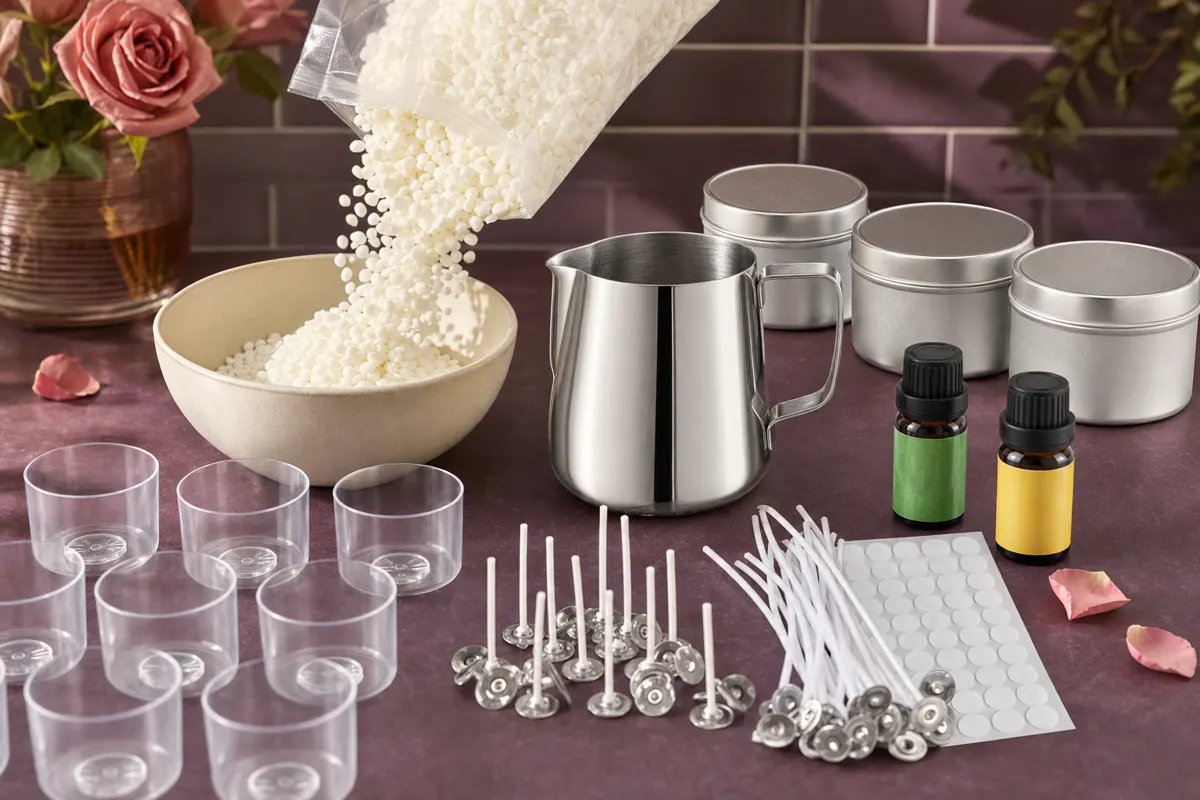
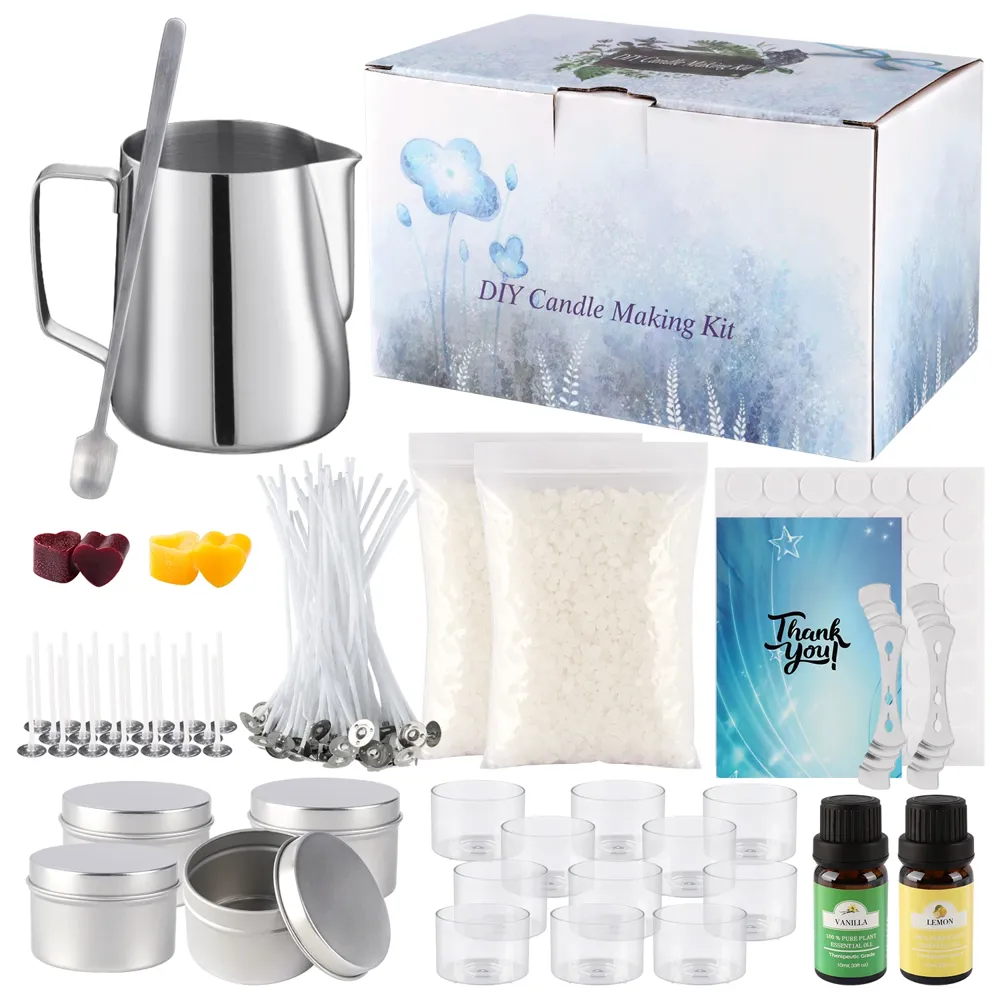
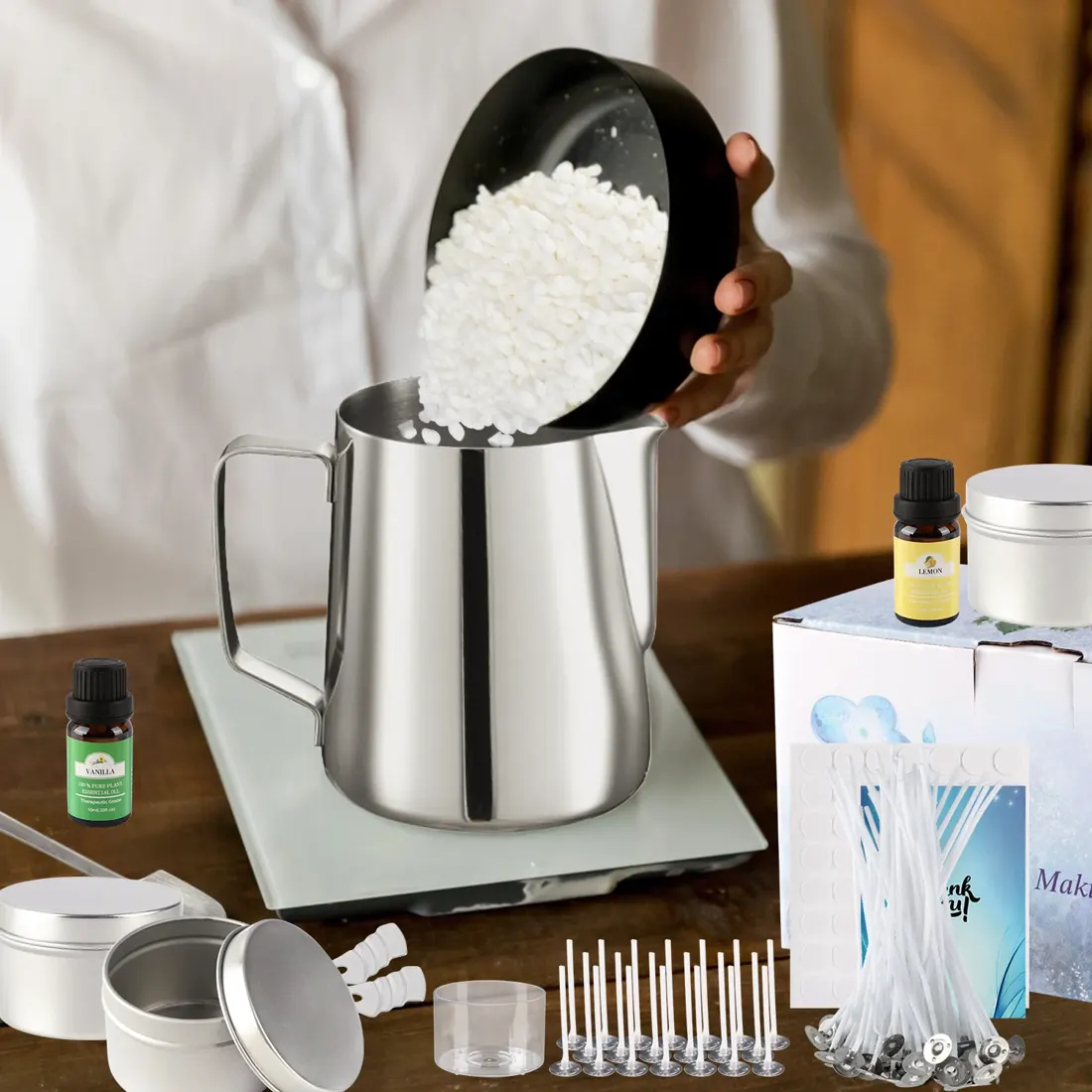
Two bags of soy wax flakes, a stainless melting pitcher, 70 pre-waxed wicks and 14 containers. Soy melts gently, washes out cleanly and holds fragrance, which is why every beginner starts here.
🚨 Only a few left in stock
✓ Free shipping ✓ 30-day money-back guarantee 🔒 Secure checkout
Why Soy Wax Is the Beginner's Wax
Wax choice sounds like a connoisseur's decision and is actually a practical one, especially on a first batch. The wax you learn on should tolerate imprecision, because you will not have a thermometer, you will get distracted, and you will pour slightly too hot or slightly too cool. Soy tolerates all of that and still produces a candle that burns properly.
It also fails gently. Overheat paraffin and you have a genuine hazard along with discoloration. Overheat soy and you mostly get a candle that looks less pretty. For someone learning the process in a home kitchen, that difference matters more than any scent-throw comparison.
Then there is the washing up, which nobody mentions in product descriptions and everybody notices in practice. Soy softens with hot water and dish soap, so the pitcher, spoon and any drips come clean without solvents. That single property is why the stainless pitcher in this kit stays usable batch after batch instead of accumulating a layer you cannot shift.
Where soy genuinely gives something up is raw scent power. Paraffin throws harder from a cold start. Soy rewards two habits instead: stirring the fragrance thoroughly through the melt, and letting the finished candle cure for several days before the first burn. Our wax types guide compares all four common waxes properly, and the soy walkthrough covers the pour itself step by step.
Soy Against the Other Three Common Waxes
| Wax | Melting behaviour | Scent throw | Cleanup | Best for |
|---|---|---|---|---|
| Soy (in this kit) | Low melting point, forgiving | Gentle, improves with curing | Hot soapy water | Learning, container candles |
| Paraffin | Higher melting point | Strongest of the four | Harder, often needs solvent | Maximum scent throw |
| Coconut | Very soft, often blended | Excellent, premium feel | Easy | Blends, higher-end pours |
| Beeswax | Highest melting point | Natural honey scent of its own | Difficult, high melt point | Unscented, natural candles |
These are the general working characteristics of each wax family rather than measurements of any particular brand. Once you have a batch behind you and know what you want to change, the supplies page explains what to restock and in what order.
The Two Habits That Change a Soy Candle
Soy divides beginners into two groups, and the split is not about skill. It is about two waiting periods that nobody wants to observe on their first evening. From reading every review, here is what actually separates a soy candle that smells of something from one that does not:
| Habit | What impatience produces | What patience produces |
|---|---|---|
| Stirring fragrance into the melt | Oil pools and separates; the candle smells faint | Fragrance carried evenly through the wax |
| Curing before the first burn | A candle lit the same evening, throwing little | Several days of curing, noticeably stronger throw |
| Pouring temperature | Too hot cracks and sinks; too cool sets lumpy | A flat, even top |
None of these require equipment you do not have. They require the willingness to stir for longer than feels sensible and to leave a finished candle alone for a few days. That is genuinely the whole difference: technique and time, and the kit already gives you room for both.
What Ships With the Soy
average across 105 four and five star buyer reviews of this kit, with 900+ sold
— verified buyer review data, 2026
of soy wax flakes in every kit, alongside 14 containers to pour them into
— printed kit contents, 2026
countries we ship to, free of charge, in 6-10 business days
— Waxwright shipping policy, 2026
Getting a Flat, Even Top
The finish on a soy candle is decided in the minutes after the pour, not during the melt. Cold containers pull heat out of the wax at the edges first, so the surface sets before the middle and dips. A cold draught does the same thing. Neither ruins the candle, and both are avoidable by pouring in a warm room and leaving the candles where they are.
Frosting, the white crystalline bloom soy develops as it cools, is a property of the wax rather than a defect. Commercial soy candles show it too; it is simply hidden by opaque containers or accepted as part of the look. If it bothers you, it is less visible in the metal tins than in the clear jars, and the four tins in this kit are the place to start.
If a top does set badly, the standard fix is to reserve a little melted wax and pour a thin second layer once the first has set. That is exactly what the extra wax in the kit gives you room for, and it is covered along with the rest of the process in the home candle walkthrough.
Wicks matter for the burn rather than the look, and the ones in this kit are matched to its containers. Move to a wider container later and the wick has to change with it, which is what the wick size guide is for. For choosing your next scent, read the fragrance oil guide, and for gifting or hobby use see the adults page.
Soy Wax Questions
Why is soy wax recommended for beginners?
Soy melts at a comparatively low temperature, which makes the melting step forgiving and reduces the risk of scorching the wax. It also releases from containers cleanly when you wash up, and it holds fragrance well. Those three properties are why nearly every starter kit on the market ships soy rather than paraffin.
How much soy wax comes in the kit?
Two sealed bags of flakes. No weight is printed on the packaging, so we do not quote one. What we can tell you is what it is intended to fill: the fourteen containers that ship in the same box, four metal tins and ten clear jars.
Does soy wax smell as strong as paraffin?
Paraffin generally throws scent more aggressively, which is why many mass-market candles use it. Soy throws more gently and rewards patience: stir the fragrance thoroughly into the melt and let the finished candle cure for several days, and the difference narrows considerably.
Why does my soy candle look bumpy or frosted on top?
Both are normal characteristics of soy rather than faults. Frosting is the crystalline white bloom soy develops as it cools, and an uneven top usually means the wax cooled too fast or too cold a room. Neither affects how the candle burns, and pouring a little slower in a warmer room reduces both.
Reviewed and updated July 29, 2026. See how we test and read the buyer reviews.
Start With Soy
The complete kit at $49.95, free shipping to 5 countries, 30-day money-back guarantee.
Get the kit →